• Skip to main content
  • Skip to primary sidebar

Reefwing Software

  • Home
  • Book
  • Development
  • Blog
  • Contact Us
  • Privacy
You are here: Home / Archives for AI

AI

June 1, 2026 by David Such Leave a Comment

A Chip That Thinks using 7 μW

Most AI research is about making the cortex bigger. This one is about making the spinal cord cheaper.

A team at the University of Michigan has built a tiny computing device that controls a balancing propeller using about seven millionths of a watt. For comparison, the LED bulb in your kitchen burns through about ten watts. The Michigan device runs the control task on roughly a millionth of that power.

That is not a typo. It is the finding of a paper published in ACS Nano in March 2026, and it matters because power is the wall that edge AI keeps running into (or falling off?).

Why Power Is the Whole Game

Most of the interesting AI you read about lives in a data centre. It has a wall socket, a cooling system, and an electricity bill measured in millions. Edge AI is what happens when you try to put that intelligence into a hearing aid, a pacemaker, a drone, a soil sensor, or a pair of smart glasses. You are running off a small battery, or whatever energy you can scavenge from sunlight or vibration.

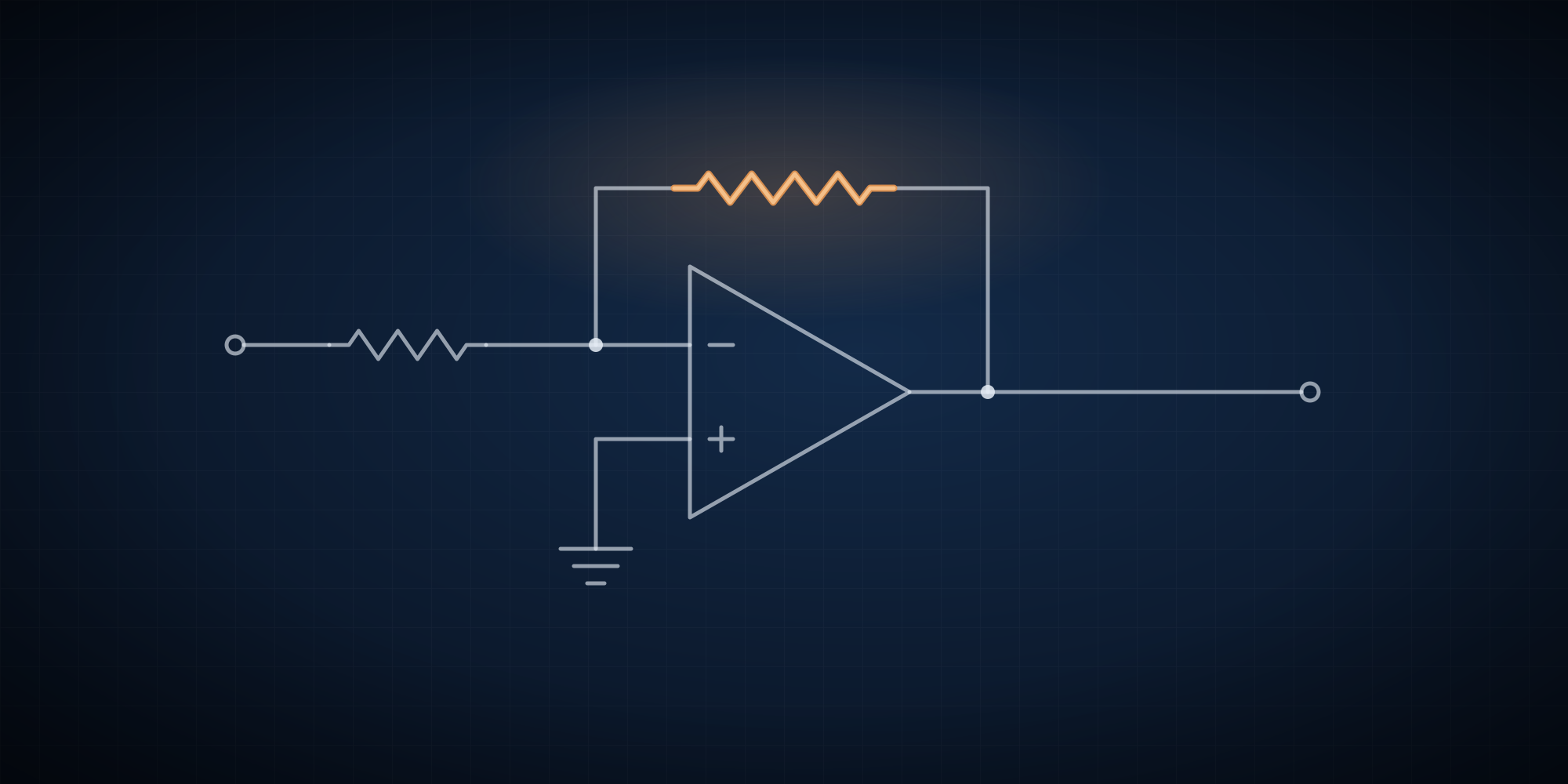
In that world, every microwatt counts, and there is one component that has been quietly eating the budget for decades: the analog-to-digital converter (ADC). Sensors produce continuous signals, but computers think in ones and zeros. Something has to translate between the two, and that translator is the ADC. It is usually the single biggest line item in a battery-powered device’s power budget.

The Michigan team’s trick is to skip the translator entirely.

Read More…

Filed Under: AI, Embedded, Robotics Tagged With: embedded AI

June 1, 2026 by David Such Leave a Comment

Who is Liable for Onboard AI?

As foundation models move from the cloud into physical robots, a fundamental question emerges: who is accountable when an AI-controlled machine makes a decision that causes harm?

In this episode, we examine the growing collision between embodied AI, functional safety, and emerging regulation. We explore how new frameworks such as the EU AI Act and the Machinery Regulation are reshaping expectations for developers, manufacturers, and deployers of intelligent robots. From humanoid robots and autonomous mobile manipulators to AI-enabled industrial machinery, the challenge is no longer simply making robots smarter. It is making them governable.

We investigate a proposed architectural solution that is gaining traction across industry and academia: the hardware-isolated safety supervisor. By separating non-deterministic AI reasoning from deterministic safety-critical control systems, this approach aims to create clear lines of accountability while preserving the benefits of onboard intelligence.

Along the way, we examine NVIDIA’s Cosmos Reason 2 model, the EmbodiedGovBench governance framework, emerging standards efforts, and the practical realities of deploying foundation models on embedded platforms. We also ask whether traditional functional safety concepts such as SIL and ASIL can adequately address the unique challenges posed by robots whose actions are selected by large vision-language models.

The broader question is one that every roboticist, embedded engineer, and AI practitioner will soon face: when intelligence becomes local, autonomous, and physically embodied, what mechanisms ensure that accountability remains local too?

Listen to the Podcast…

Filed Under: AI, Embedded Tagged With: embedded AI, podcast

May 28, 2026 by David Such Leave a Comment

The Godfather of AI Claims a Multi-modal AI had a Subjective Experience

The Prism, the Pointing Arm, and What Hinton Got Right (and Wrong).

In a recent talk, Geoffrey Hinton offered a thought experiment he thinks settles a long-running argument about machine consciousness. The setup is simple. You have a multimodal chatbot with a camera, a robot arm, and language. You place an object in front of it and ask it to point. It points. You then sneak a prism in front of the camera lens. You ask again. It points off to one side, because the prism has bent the light. You tell it about the prism. The chatbot replies: “Oh, I see. The prism bent the light. The object is actually straight in front of me, but I had the subjective experience that it was off to one side.”

Hinton’s claim is that the chatbot, in saying this, is using the phrase “subjective experience” exactly the way you and I use it. Therefore the chatbot had a subjective experience. Therefore the line we draw between human and machine experience is, in his words, rubbish.

I had to think about this, because Hinton is that guy, and the example is doing more work than it first appears. But I also want to say where I think the argument is weaker than it is being sold, and where I think it is stronger.

Read More…

Filed Under: AI, Embedded, Title Post Tagged With: embedded AI

May 28, 2026 by David Such Leave a Comment

Creating an Index for a Technical Book using AI

How I used Claude to build a 5,000-entry index for a 600 page technology book without going crazy. The hard part of indexing is not inserting tags, but you will want to automate the boring mechanical labour.

I have spent the last couple of years writing a book about Embedded AI for No Starch Press (NSP). It has been three times the amount of work that I was expecting. The editing process feels never ending and by the end you will never want to read your book again. It does make for a better book though, and I am now an advocate for having an external editor.

One of the more tedious aspects of putting together a book is index tagging. The publisher can index for you, but it will cost around $4 per page and this comes out of your royalties. Not many people get rich writing a book, but there is no point throwing away hard earned royalties! There are lots of things you have to do manually when creating a book (like writing), but this feels like a task that a Large Language Model (LLM) should be good at.

NSP expects the finished index to weigh in at 5 to 8 percent of the manuscript word count, so for a 100,000-word book you are building something in the range of 5,000 to 8,000 words. This is a substantial document in its own right.

Read More…

Filed Under: AI, Embedded, Title Post Tagged With: embedded AI

May 16, 2026 by David Such Leave a Comment

Your Brain Has a Real Estate Problem, and Dreams Might Be the Solution

What a strange theory about REM sleep tells us about building AI that doesn’t quietly fall apart

Put a blindfold on a sighted adult and stick them in an fMRI scanner. Get them to feel some textured surfaces with their fingers. Then watch what happens in their visual cortex, the part of the brain that is supposed to be doing absolutely nothing in the dark. It lights up. Not after weeks, not after days, but after about forty-five minutes.

That finding, which has been replicated in various forms since the early 2000s, is one of the more unsettling results in modern neuroscience. The visual cortex is not a quiet, dormant region waiting patiently for the lights to come back on. The moment you stop using it for vision, the neighbours start moving in. Touch first, then hearing. Within an hour, real estate that was supposed to be reserved for processing photons is being repurposed for something else entirely.

This raises an obvious and slightly alarming question. If your visual cortex starts getting taken over within an hour of going dark, what happens every single night when you close your eyes for eight hours?

A neuroscientist named David Eagleman thinks he has the answer, and it is one of the more interesting hypotheses about why we dream that has come along in a while. He calls it the defensive activation theory, and once you understand it, you start seeing the same pattern everywhere, including in some surprisingly broken corners of how we currently build AI.

Read More…

Filed Under: AI, Embedded, Robotics Tagged With: embedded AI

May 14, 2026 by David Such Leave a Comment

A chip that controls a balancing propeller on seven microwatts

Every battery-powered device you own has a quiet energy hog in it that nobody talks about. It is not the processor, it is not the radio, and it is not the screen. It is the analog-to-digital converter, the small piece of circuitry that translates the messy real world into the clean ones and zeros a computer can think about. For thirty years it has been the line item that decides how long your hearing aid, your pacemaker, or your soil sensor lasts on a battery.

In March 2026, a team at the University of Michigan published a result that quietly removes that converter from the picture for a specific class of problems. Their bismuth selenide memristor runs a closed-loop control task at about seven microwatts, roughly a millionth of what a household LED bulb pulls. The chip does not run code in any conventional sense. The physics does the arithmetic, and the answer drives the motor directly.

In this episode, we walk through what the device actually is, why removing the converter changes the energy budget by orders of magnitude, and which products land first when microwatt-class intelligence becomes buildable. We talk about hearing aids, implants, environmental sensors, and the small drones that have been waiting for this kind of result for a decade. We also talk about what this chip cannot do, because the press releases tend to skip that part. It will not run a language model. It will not recognise your face. It will run the reflexes underneath all of that, and the case for why those reflexes matter more than the cortex gets credit for is the through-line of the episode. #embeddedAI #podcast

Listen to the Podcast…

Filed Under: AI, Embedded, Robotics Tagged With: embedded AI, podcast

May 12, 2026 by David Such Leave a Comment

Spot the Robot Can Reason, but it can’t hold a can of soda

Boston Dynamics and Google DeepMind announced last month that Spot is now running Gemini Robotics-ER 1.6, a high-level embodied reasoning model. The headline is that Spot has been taught to reason. The commercial pitch is industrial inspection: wandering around a facility, reading gauges, spotting spills, deciding what to do when something looks wrong. So far, so good.

Buried in the demo video is a small failure that says more about the architecture than the press release does. Asked to recycle cans in the living room, Spot picks one up sideways. If there is any liquid left in the can, it ends up on the carpet. The problem is using a language model to solve something handled by other more primitive layers in the organic world.

Read the complete article…

Filed Under: AI, Embedded, Robotics, Title Post Tagged With: embedded AI

May 7, 2026 by David Such Leave a Comment

Why 95% of AI Deployments Fail

MIT’s August 2025 study of 300 enterprise generative AI deployments found that 95% produced no measurable P&L impact. Gartner forecasts that more than 40% of agentic AI projects will be cancelled by 2027. McKinsey’s State of AI 2025 identifies workflow redesign as the single strongest correlate with EBIT impact, yet only 21% of organisations have redesigned any workflows. The data converges on a structural conclusion: enterprise AI is failing because the operational substrate is inadequate, not because the models are. This episode examines the process-readiness gap, the misallocation pattern that concentrates investment in low-ROI front-office applications, and what the 5% of high performers do differently. It is an architectural argument, not a change-management one: AI is a linear amplifier acting on a pre-existing process, and the sign of the output depends on the sign of the input.

Listen to Podcast…

Filed Under: AI, Embedded, Title Post Tagged With: embedded AI, podcast

May 4, 2026 by David Such Leave a Comment

Why ARC’s $2M Bet Against Priors Is the Wrong Bet for Embedded AI

ARC says intelligence emerges from learning when priors are minimised. Vertebrates disagree and have spent 500 million years proving the opposite.

The ARC Prize is a public competition with $2 million on the table, run by François Chollet (creator of Keras) and Mike Knoop (co-founder of Zapier). The premise is that current AI benchmarks measure what a model already knows, not how well it learns. Their fix is ARC-AGI, a series of reasoning tasks that are easy for humans and, so far, brutal for machines. Frontier models score below 4% on ARC-AGI-2.

The newest version, ARC-AGI-3, swaps static puzzles for interactive game environments where the agent has to figure out the rules by playing, with no instructions and no pre-loaded domain knowledge. Humans score 100%. AI scores under 1%. The gap demonstrates the point. Behind the gap is a philosophy about what intelligence is and where it comes from, and that philosophy is where the Primal Layers framework and ARC differ.

Read Full Article…

Filed Under: AI, Embedded, Robotics Tagged With: embedded AI

April 27, 2026 by David Such Leave a Comment

Why Humans and Robots must Dream

Put a blindfold on a sighted adult and the visual cortex starts being colonised by touch and hearing within forty-five minutes. Not weeks. Not days. Forty-five minutes. This is not a quirk of extreme cases. It is how the cortex works all the time. Every region of the brain is in continuous low-grade negotiation with its neighbours over territory, and the currency of that negotiation is activity. Stop using a subsystem and the neighbours move in, fast. This is the empirical foundation of a hypothesis from neuroscientist David Eagleman called the defensive activation theory: that REM sleep exists specifically to keep the visual cortex active during the eight hours each night when external input is unavailable, defending its territory against takeover by senses that never go offline.

The theory itself is plausible but not yet directly proven. What is proven, and what matters more for engineers, is the underlying principle. A complex system with reconfigurable resources will silently lose capability in any subsystem that is not regularly exercised, even when nothing is actively trying to take that capability away. This is not catastrophic forgetting in the usual machine learning sense, where new training overwrites old parameters. This is something subtler and arguably more dangerous: passive territorial loss in any system that supports continuous adaptation. It shows up wherever capabilities are not being exercised in long-running adaptive AI: rarely-routed experts in mixture-of-experts models, underused sensor pipelines in multi-modal robotics, capabilities that drift out of online reinforcement learning agents over months of deployment. Most current architectures treat their structure as fixed by design. Biology treats its structure as continuously contested.

This episode looks at what defensive activation reveals about a missing primitive in modern AI architecture. Current systems have two fundamental modes, training and inference. Brains have at least three, and the third one, the maintenance mode that operates during REM sleep, has no clean equivalent in the systems we build. We examine what this mode is doing structurally, why generative replay in continual learning is mechanistically closer to dreaming than the field usually acknowledges, and what a telemetry-driven maintenance subsystem might look like for embedded and edge AI. The closing argument is straightforward: if biology has been running this experiment for a few hundred million years and converged on internally-driven activation as the way to maintain a plastic computational substrate, the absence of an equivalent mechanism in our architectures is not a neutral design choice. It is a gap.

Listen to the podcast…

Filed Under: AI, Robotics Tagged With: embedded AI, podcast

  • Page 1
  • Page 2
  • Page 3
  • Interim pages omitted …
  • Page 5
  • Go to Next Page »

Primary Sidebar

Embedded AI News

Recent Posts

  • A Chip That Thinks using 7 μW June 1, 2026
  • Who is Liable for Onboard AI? June 1, 2026
  • The Godfather of AI Claims a Multi-modal AI had a Subjective Experience May 28, 2026
  • Creating an Index for a Technical Book using AI May 28, 2026
  • Your Brain Has a Real Estate Problem, and Dreams Might Be the Solution May 16, 2026

Featured Posts

A Chip That Thinks using 7 μW

June 1, 2026 By David Such Leave a Comment

Most AI research is about making the cortex bigger. This one is about making the spinal cord cheaper. A team at the University of Michigan has built a tiny computing device that controls a balancing propeller using about seven millionths of a watt. For comparison, the LED bulb in your kitchen burns through about ten […]

Archives

  • June 2026
  • May 2026
  • April 2026
  • March 2026
  • April 2024
  • March 2024
  • February 2024
  • January 2024
  • November 2023
  • October 2023
  • July 2023
  • June 2023
  • May 2023
  • April 2023
  • March 2023
  • November 2022
  • September 2022
  • August 2022
  • July 2022
  • April 2022
  • March 2022
  • February 2022
  • January 2022
  • October 2021
  • August 2021
  • July 2021
  • June 2021
  • February 2021
  • November 2020
  • October 2020
  • May 2020
  • April 2020
  • January 2020
  • November 2019
  • October 2019
  • September 2019
  • July 2019
  • June 2019
  • May 2019
  • March 2019
  • January 2019
  • December 2018
  • October 2018
  • September 2018
  • August 2018
  • July 2018
  • June 2018
  • May 2018
  • March 2018
  • January 2018
  • December 2017
  • November 2017
  • October 2017
  • September 2017
  • August 2017
  • July 2017
  • June 2017
  • April 2017
  • February 2017
  • January 2017
  • December 2016
  • November 2016
  • October 2016
  • September 2016
  • July 2016
  • May 2014
  • April 2014

Search

Copyright © 2026 · Executive Pro on Genesis Framework · WordPress · Log in