• Skip to main content
  • Skip to primary sidebar

Reefwing Software

  • Home
  • Book
  • Development
  • Blog
  • Contact Us
  • Privacy
You are here: Home / 2026 / Archives for April 2026

Archives for April 2026

April 27, 2026 by David Such Leave a Comment

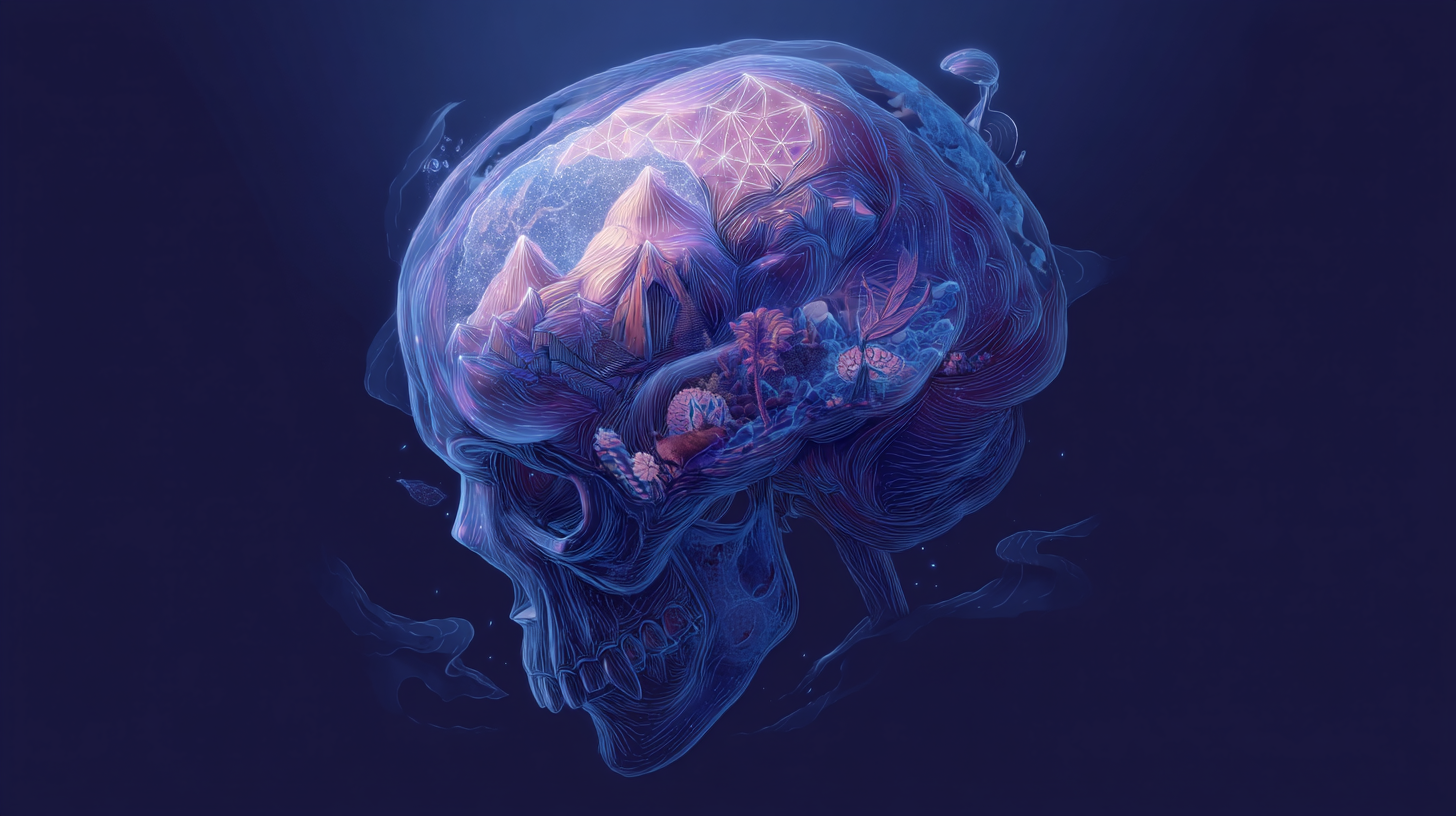
Why Humans and Robots must Dream

Put a blindfold on a sighted adult and the visual cortex starts being colonised by touch and hearing within forty-five minutes. Not weeks. Not days. Forty-five minutes. This is not a quirk of extreme cases. It is how the cortex works all the time. Every region of the brain is in continuous low-grade negotiation with its neighbours over territory, and the currency of that negotiation is activity. Stop using a subsystem and the neighbours move in, fast. This is the empirical foundation of a hypothesis from neuroscientist David Eagleman called the defensive activation theory: that REM sleep exists specifically to keep the visual cortex active during the eight hours each night when external input is unavailable, defending its territory against takeover by senses that never go offline.

The theory itself is plausible but not yet directly proven. What is proven, and what matters more for engineers, is the underlying principle. A complex system with reconfigurable resources will silently lose capability in any subsystem that is not regularly exercised, even when nothing is actively trying to take that capability away. This is not catastrophic forgetting in the usual machine learning sense, where new training overwrites old parameters. This is something subtler and arguably more dangerous: passive territorial loss in any system that supports continuous adaptation. It shows up wherever capabilities are not being exercised in long-running adaptive AI: rarely-routed experts in mixture-of-experts models, underused sensor pipelines in multi-modal robotics, capabilities that drift out of online reinforcement learning agents over months of deployment. Most current architectures treat their structure as fixed by design. Biology treats its structure as continuously contested.

This episode looks at what defensive activation reveals about a missing primitive in modern AI architecture. Current systems have two fundamental modes, training and inference. Brains have at least three, and the third one, the maintenance mode that operates during REM sleep, has no clean equivalent in the systems we build. We examine what this mode is doing structurally, why generative replay in continual learning is mechanistically closer to dreaming than the field usually acknowledges, and what a telemetry-driven maintenance subsystem might look like for embedded and edge AI. The closing argument is straightforward: if biology has been running this experiment for a few hundred million years and converged on internally-driven activation as the way to maintain a plastic computational substrate, the absence of an equivalent mechanism in our architectures is not a neutral design choice. It is a gap.

Listen to the podcast…

Filed Under: AI, Robotics Tagged With: embedded AI, podcast

April 24, 2026 by David Such Leave a Comment

Why Asimov’s Three Laws Shouldn’t Be the Blueprint for AI Principles

Every time a news story breaks about some new AI mishap, a chatbot lying to a user, a self-driving car making a dodgy decision, a recommendation engine nudging teenagers toward inappropriate content, someone in the comments inevitably writes, “We just need Asimov’s Three Laws.”

The trouble is that Isaac Asimov wrote the Three Laws as a plot device, not as an engineering specification. Almost every story he wrote about them was about how they fail. It is a bit like reading Jurassic Park and concluding that you now have a solid operating manual for cloning dinosaurs.

If we are serious about building safe AI, and particularly if we are building the sort of layered, bio-inspired systems that drive physical robots, we need to start from a different foundation. This article explains why, and proposes a replacement set of principles drawn from the Primal Layers framework.

Read the complete article…

Filed Under: AI, Embedded, Title Post Tagged With: development, embedded AI

April 20, 2026 by David Such Leave a Comment

Sovereign AI and the End of the Borderless Cloud

The borderless cloud era is ending. In the second week of January 2026, four government decisions announced in rapid succession made that shift undeniable: the UK activated its £500 million Sovereign AI Unit, France committed €109 billion, the UAE consolidated a $40 billion data centre portfolio, and the Trump administration revised chip export rules to China. In this episode, we examine why AI infrastructure is now being treated as a strategic national utility on par with energy and water, and what that means for engineers and boards making architectural decisions today.

We map the global sovereign AI landscape, roughly 130 national initiatives across more than 50 countries, and separate political rhetoric from engineering reality. We examine the distinction between regulatory sovereignty (the legal authority to govern AI) and compute sovereignty (the physical capacity to run it), and explain why most nations have the first without the second. We cover China’s full-stack response through Huawei’s Ascend and CloudMatrix programme, a deliberate trade-off of efficiency for independence that is becoming a template other regions may follow. We draw on the Clipper chip precedent from the 1990s to show why embedded enforcement mechanisms in silicon create durable market incentives that are difficult to reverse.

Listen to the Podcast…

Filed Under: AI, Embedded Tagged With: embedded AI, podcast

April 5, 2026 by David Such Leave a Comment

Pi and the Mirage of Patternicity

In April 2025, a claim began circulating online: pi is gradually increasing around the 7,237th decimal place. A math enthusiast in Cincinnati named April Simons had apparently flagged the anomaly. Prof F.O. Olsday, head of the Number Theory Group at Princeton, was quoted confirming it. Cosmologists were linking it to the accelerating expansion of the universe. The same algorithm, the same hardware, different results. A 4 becoming a 5. Persistent. Inexplicable.

Except that “F.O. Olsday” is a phonetic rearrangement of “Fool’s Day.” And April Simons was posting from Cincinnati on the first of April.

Pi has not changed. It cannot change. It is a fixed ratio determined by Euclidean geometry, and every one of its digits is as immutable as the definition that produces them. The 7,237th digit was a 4 before 2016, it was a 4 after 2016, and it will remain a 4 until the heat death of the universe and beyond.

But here is what matters: the joke worked. It worked on humans, and it would work on machines.

This episode examines why both biological and artificial neural networks are structurally vulnerable to detecting patterns in structurally empty data, a phenomenon with a clinical name: apophenia. We trace the evolutionary logic behind false positive pattern detection, from Skinner’s superstitious pigeons to the fusiform face area that fires on toast. We then show how the same asymmetry, optimising for recall at the expense of precision, is recapitulated in trained neural networks through simplicity bias, the documented tendency of gradient-descent-trained models to latch onto whichever statistical regularity is easiest to extract, regardless of whether it reflects causal structure.

Listen to the Podcast…

Filed Under: AI, Embedded Tagged With: embedded AI, podcast

April 4, 2026 by David Such Leave a Comment

Claude Code: Creating a C++ Linter for Embedded Development

I know! I’m late to the Claude Code party but now I’m here, I’m all in. If you write C++ for microcontrollers, or edge inference, you already know that the rules are different from desktop software. No heap allocation after startup. No exceptions. No recursion on a 4 KB stack. And these constraints are not optional if you want your firmware to survive.

The problem is that general-purpose linters do not enforce the rules you need. Clang-tidy is powerful, but configuring it to catch you just used int instead of int32_t, requires writing custom checks in C++ against the AST. That is a significant investment for what should be a simple rule. I wanted something I could tweak for each project.

Read More…

Filed Under: AI, App Development, Embedded, Title Post Tagged With: development, embedded AI

Primary Sidebar

Embedded AI News

Recent Posts

  • Cutting Claude’s Token Bill by Converting PDFs to Markdown June 7, 2026
  • Why PrimalBot Needs to Sleep June 7, 2026
  • Squeezing AI into your Pocket June 7, 2026
  • A Chip That Thinks using 7 μW June 1, 2026
  • Who is Liable for Onboard AI? June 1, 2026

Featured Posts

Cutting Claude’s Token Bill by Converting PDFs to Markdown

June 7, 2026 By David Such Leave a Comment

Claude charges you twice for every PDF page, once for the text and once for the image. Converting to Markdown drops half the bill, as long as the document’s value is not in its figures. A 50-page PDF can cost you 75,000 to 150,000 tokens before Claude has read a word of it. On a […]

Archives

  • June 2026
  • May 2026
  • April 2026
  • March 2026
  • April 2024
  • March 2024
  • February 2024
  • January 2024
  • November 2023
  • October 2023
  • July 2023
  • June 2023
  • May 2023
  • April 2023
  • March 2023
  • November 2022
  • September 2022
  • August 2022
  • July 2022
  • April 2022
  • March 2022
  • February 2022
  • January 2022
  • October 2021
  • August 2021
  • July 2021
  • June 2021
  • February 2021
  • November 2020
  • October 2020
  • May 2020
  • April 2020
  • January 2020
  • November 2019
  • October 2019
  • September 2019
  • July 2019
  • June 2019
  • May 2019
  • March 2019
  • January 2019
  • December 2018
  • October 2018
  • September 2018
  • August 2018
  • July 2018
  • June 2018
  • May 2018
  • March 2018
  • January 2018
  • December 2017
  • November 2017
  • October 2017
  • September 2017
  • August 2017
  • July 2017
  • June 2017
  • April 2017
  • February 2017
  • January 2017
  • December 2016
  • November 2016
  • October 2016
  • September 2016
  • July 2016
  • May 2014
  • April 2014

Search

Copyright © 2026 · Executive Pro on Genesis Framework · WordPress · Log in