• Skip to main content
  • Skip to primary sidebar

Reefwing Software

  • Home
  • Book
  • Development
  • Blog
  • Contact Us
  • Privacy
You are here: Home / Archives for App Development

App Development

April 28, 2014 by David Such Leave a Comment

The Care & Feeding of Your Developer

PastedGraphic-1

You have decided that your business needs an app, so what is the best way to ensure that you get what you want?

Well you could follow the App Happening four step framework:

  • Concept, Marketing & Viability
  • Design & Specs
  • Build & Approve
  • Launch & Support

This is a best in class solution for getting the app you want, at the lowest cost, in the shortest possible time. App Happening provides free marketing tips, app concept templates, strategy guides, development timelines and even an eBook on creating a successful app (http://www.apphappening.com/ah/appbuildingguides). So why does (almost) nobody use these? I suspect the reason is a combination of, “too hard”, “why bother” and “I just want to get started”!

As a Developer, I’m not too worried about whether your app is going to sell well or deliver on your business case. My job is to deliver the app you specified at the cost I bid and within the agreed time frame. If you have reached the stage of hiring a Developer, I assume that you have already worked out that the cost and effort is worthwhile. If not, then I suggest that you go and have a look at the Concept, Marketing & Viability section (http://www.apphappening.com/ah/conceptmarketingviability) of the web site.

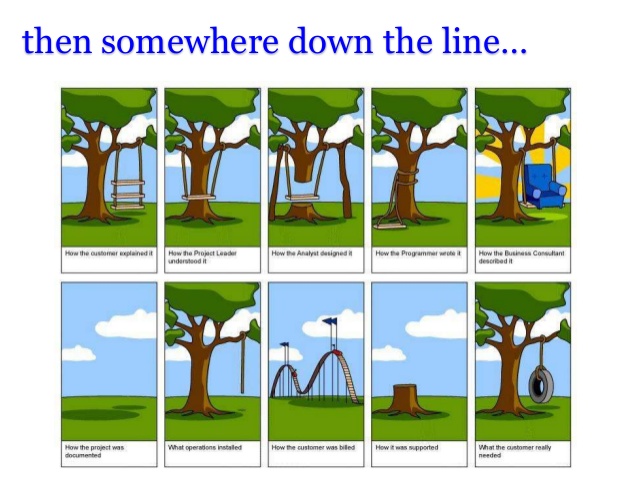
I’m also assuming that you have a clear idea of what your app will do, because if you don’t, explaining the concept to me will be difficult. I don’t need a complete Functional Description and fully laid out screen shots initially but I need enough to be able to provide you a price and how long the development process will take. Before going into the bare minimum specification requirements, I would like to discuss why the specification step is important.

How to spend a lot of Money and NOT get what you want!

PastedGraphic-2

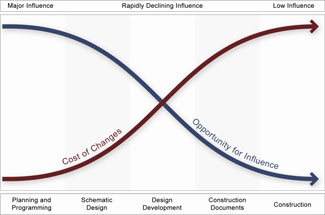
If you have ever renovated a house you will know that the cheapest time to modify the design is before construction start. It is exactly the same for app development. You want to have a very good idea of the outcome before you start. Sooner or later you will need to make decisions about what the app will do and what it will look like. Given this fact, doesn’t it make sense to do it at the beginning? I guarantee that if you do, it will save you money and reduce frustration.

There are generally two ways that you can engage a Developer:

1. Fixed price; or
2. Hourly rate.

If you choose to go the hourly rate route then you could just make it up as you go along (some people call this AGILE development) but it can become expensive. If you select the fixed price approach, it is much more important that you get the definition phase correct. Do not assume that a feature that you want is included in the design, if it hasn’t been explicitly specified then your developer hasn’t costed it and it is unlikely to end up in the final product. Assumptions in the design phase of fixed price contracts lead to disputes, which waste everyones time and energy.

design

I have enough stress in my life…

If the specification of your app consists of something like “i need a game built in 1 week for a fixed price of $100”, don’t be surprised if no developers bid on it (what game? what platform? what device? what???). The level of design specification required depends on where you are in the development cycle. If you just want indicative pricing to plug into your business model then simple dot points which describe the objective, functionality and target platform (e.g. iOS or Android) are probably sufficient – just be up front with the Developer.

If you are committed to building an app then I’m afraid that I’m going to direct you back to the App Happening website page (http://www.apphappening.com/ah/designspec) on Design and Specification. It is in your interests to specify the app as fully as possible. You should include the Developer in this process if possible. Start with your simple dot point functional specification. Your Developer can tell you what is technically possible on a particular platform and what is possible but difficult (i.e. expensive). Once you have a good idea of app functionality, sketch up some indicative screen shots (wire frames), pen and paper is fine. Alternately get the Developer to suggest something. You want these wire frames to be low fidelity so that people are comfortable playing around with the design and changing them. The combination of the Functional Spec and the Wireframes will give you a flow diagram or flow map which describes how users will move around your app. Make sure that key functional screens are at the top of your navigation stack.

If your Functional Spec is detailed enough, the data base design (if required) will fall out of this. For a people based app, you may want to save information like name, address, phone, favourite colour, etc. Consider whether you think the data model will change in the future, if the ability to update and migrate data models isn’t built into the original design it can be expensive to retrofit it.

If you follow the above suggestions, your Developer will be in the best possible position to assure you get what you want, when you want it.

Filed Under: App Development, Title Post Tagged With: app, development

April 28, 2014 by David Such 3 Comments

Why Your Business Needs An App

innovation

What are five ways that you can harness the power of mobile apps?

If you decide to have an app built for your business, it’s important to be clear about your objectives from the start and strategise around them:

1. To disrupt a market (or prevent you from being disrupted).

According to Wikipedia (http://en.wikipedia.org/wiki/Disruptive_innovation), disruptive innovations are those that “improve a product or service in ways that the market does not expect, typically first by designing for a different set of consumers in the new market and later by lowering prices in the existing market.” Experience has shown that you want to be the one doing the disrupting (just ask Kodak or Encyclopaedia Britannica). The Economist (http://www.economist.com/node/21530920) estimates that there will be 20 billion mobile connected devices by 2020, this provides app developers with direct access to most of your customers. You could consider mobile devices as viruses infecting your customers and apps are the payload. Uber (https://www.uber.com/) is an example of an app which is disrupting the limousine/taxi business. It provides a better service (the app knows where you are and you can see where your vehicle is in real time) and creates customer stickiness. Uber knows who the customers are and manages payment (taking their percentage off the top), the Limousine Companies no longer own the relationship which is the beginning of the end. Could someone do this to your business?

2. Apps provide another channel into your business. 

Mobile is quickly becoming the preferred e-commerce channel. 7 out of 10 online consumers access multi-channel retailers through one or more digital channels. In addition, there is a growing trend towards self service. Most call centres are experiencing year on year 20-30% decreases in phone calls, as customers move their enquiries to other channels (e.g. web and mobile). People expect to be able to change their preferences or order a goods or service no matter where they are or what time it is. If you don’t provide this capability, your competitors will.

3. An app can help build brand strength. 

Intuit have built an app called Mint (https://www.mint.com/what-is-mint/) that aggregates your financial life in one place. The Banks need to be careful that they don’t become a commodity. Any time someone gets between you and your customer, you have lost control of the relationship and of the customer experience. This makes it very easy for you to be replaced by someone else. Conversely, Domino’s have built an app which gives you a pizza store in your pocket. It allows you to browse through all the products on their menu, customise your own pizza (1.8 billion pizza combinations!), design your order, choose pick up or delivery and best of all track exactly when your order is ready in store or when it’s going to arrive at your front door. This app creates customer loyalty.

4. To deliver additional revenue.

If the preceding reasons haven’t convinced you then perhaps a business case will. How can a business be confident that the financial return justifies the initial investment and ongoing expenses? I’m afraid that only you can put together that business case but the 900,000 apps on iTunes and a similar number on Google Play suggest there is something there. Some factors to consider, when building your business case:
Increased sales by having a one to one relationship with customers;
Elimination of inbound calls through customer self service;
Reduced handling time and mistakes through automated process; and
Increased revenue through advertising5. It allows you to compete with anyone anywhere.

The last reason for you to build an app is that it provides you with a force multiplier. This is a concern for large established business and an opportunity for new start ups. In the new digital world, you don’t need expensive property in the main street of town to be successful. Anyone can develop a professional app which is a window to your services. Apps (and web sites) are the great equalisers. More and more goods and services are being procured and fulfilled electronically. Your business needs to embrace this trend.
This blog was first posted on the App Happening web site (http://blog.apphappening.com/5-reasons-business-needs-app/)

Filed Under: App Development, Title Post

  • « Go to Previous Page
  • Page 1
  • Interim pages omitted …
  • Page 7
  • Page 8
  • Page 9

Primary Sidebar

Embedded AI News

Recent Posts

  • Cutting Claude’s Token Bill by Converting PDFs to Markdown June 7, 2026
  • Why PrimalBot Needs to Sleep June 7, 2026
  • Squeezing AI into your Pocket June 7, 2026
  • A Chip That Thinks using 7 μW June 1, 2026
  • Who is Liable for Onboard AI? June 1, 2026

Featured Posts

Cutting Claude’s Token Bill by Converting PDFs to Markdown

June 7, 2026 By David Such Leave a Comment

Claude charges you twice for every PDF page, once for the text and once for the image. Converting to Markdown drops half the bill, as long as the document’s value is not in its figures. A 50-page PDF can cost you 75,000 to 150,000 tokens before Claude has read a word of it. On a […]

Archives

  • June 2026
  • May 2026
  • April 2026
  • March 2026
  • April 2024
  • March 2024
  • February 2024
  • January 2024
  • November 2023
  • October 2023
  • July 2023
  • June 2023
  • May 2023
  • April 2023
  • March 2023
  • November 2022
  • September 2022
  • August 2022
  • July 2022
  • April 2022
  • March 2022
  • February 2022
  • January 2022
  • October 2021
  • August 2021
  • July 2021
  • June 2021
  • February 2021
  • November 2020
  • October 2020
  • May 2020
  • April 2020
  • January 2020
  • November 2019
  • October 2019
  • September 2019
  • July 2019
  • June 2019
  • May 2019
  • March 2019
  • January 2019
  • December 2018
  • October 2018
  • September 2018
  • August 2018
  • July 2018
  • June 2018
  • May 2018
  • March 2018
  • January 2018
  • December 2017
  • November 2017
  • October 2017
  • September 2017
  • August 2017
  • July 2017
  • June 2017
  • April 2017
  • February 2017
  • January 2017
  • December 2016
  • November 2016
  • October 2016
  • September 2016
  • July 2016
  • May 2014
  • April 2014

Search

Copyright © 2026 · Executive Pro on Genesis Framework · WordPress · Log in