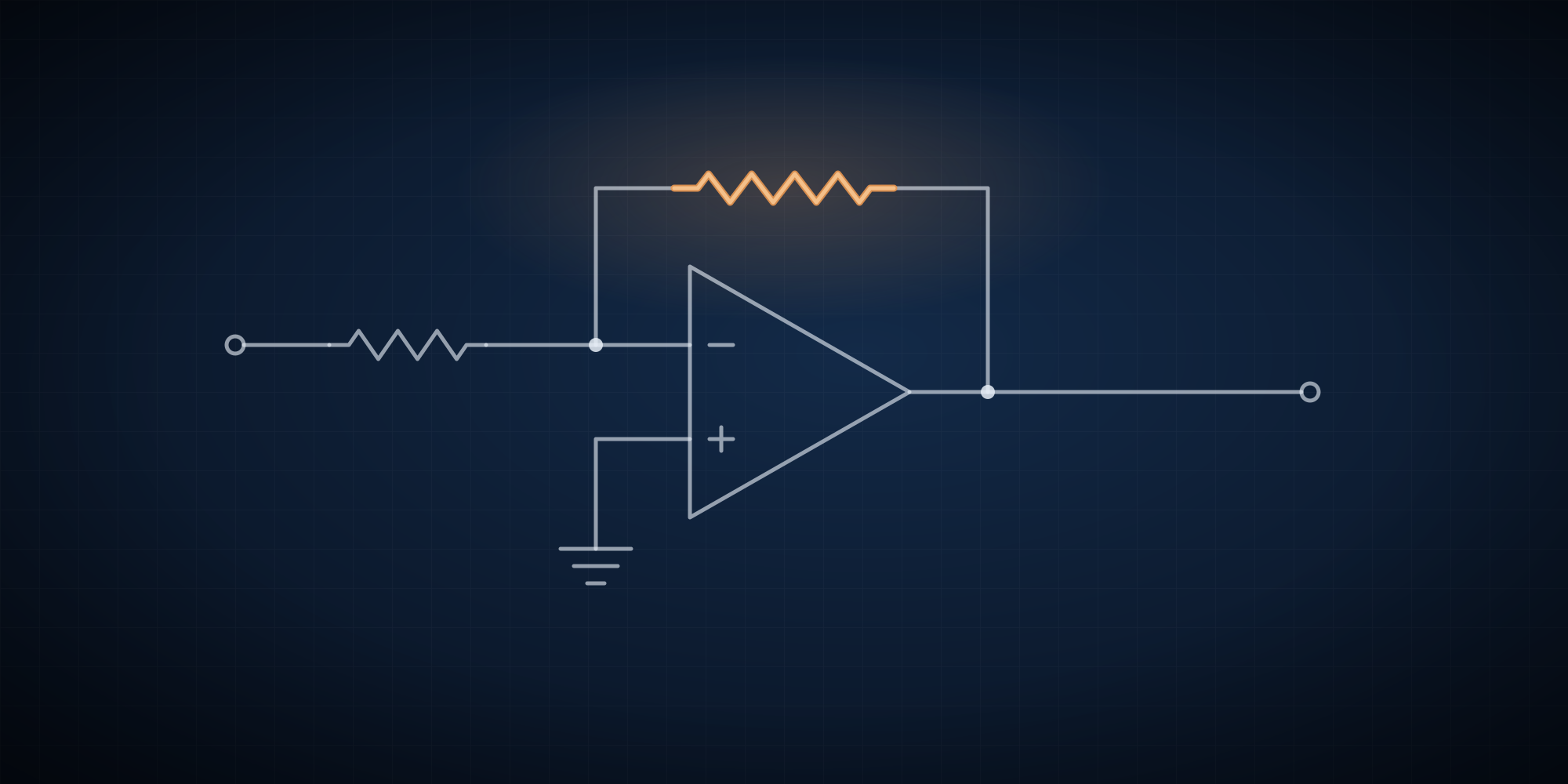
What a 741 op-amp says about training networks on data that is 99 per cent wrong.
The open-loop gain (A) of an LM741 is a minimum of 20,000 and typically 200,000. A ten to one spread, on the parameter that defines the part sounds like a problem. It doesn’t matter because nobody uses the open-loop gain. Instead, you wrap the amplifier in two resistors, and the closed-loop gain becomes approximately 1/β (β is the resistor ratio). The transistor specifications inside the amplifier can be as sloppy as they like. To confirm, calculate the closed loop gain: with A = 20,000 the closed-loop gain is 9.995, with A = 200,000 it is 9.9995. A ten to one variation in the active device becomes a 0.005 per cent variation at the output. The 1 per cent tolerance resistors are the important spec.
This is why “garbage in, garbage out” is a half truth in any system with feedback. A feedback loop does not need accurate components. It needs an accurate reference. Whether that distinction carries over to training and running neural networks turns out to be a well studied question, and the answer is the same as for the op-amp, right down to the caveat.


Leave a Reply