• Skip to main content
  • Skip to primary sidebar

Reefwing Software

  • Home
  • Copy Editor
  • iOS Apps
  • Blog
  • Contact Us
  • Privacy
You are here: Home / Archives for 2014

Archives for 0

May 25, 2014 by David Such Leave a Comment

Your First Android App

AndroidStudioIDE

We have published a new Android Tutorial over at the Android Studio Tutorial site.

Your First Android App – Hello World!

In this first tutorial we will do the traditional thing and write a “Hello World” Android app. This is very simple with Android Studio and doesn’t require any actual coding since the default app says Hello World. Nevertheless, it does demonstrate how to build an Android Project from scratch and understand the options in the New Project Wizard.

Read More…

Filed Under: Android, App Development

May 25, 2014 by David Such Leave a Comment

Installing Android Studio

Android Studio About

We are using the Developer Preview (version 0.4.0) of Android Studio at the time of writing. Installation details may change so visit the Android Studio site to check out the latest instructions and to download the relevant setup program.

From the Android Studio site:

Android Studio requires JDK 6 or greater (JRE alone is not sufficient). To check if you have JDK installed on a Mac (and which version), open a terminal and type javac -version. If JDK is not available or the version is lower than 6, download JDK from here.
To install Android Studio:
  1. Download the Android Studio package from above.
  2. Install Android Studio and the SDK tools:
    Windows:
    1. Launch the downloaded EXE file, android-studio-bundle-<version>.exe.
    2. Follow the setup wizard to install Android Studio.
      Known issue: On some Windows systems, the launcher script does not find where Java is installed. If you encounter this problem, you need to set an environment variable indicating the correct location.

      Select Start menu > Computer > System Properties > Advanced System Properties. Then open Advanced tab > Environment Variables and add a new system variable JAVA_HOME that points to your JDK folder, for exampleC:\Program Files\Java\jdk1.7.0_21.

    Mac OS X:
    1. Open the downloaded DMG file, android-studio-bundle-<version>.dmg.
    2. Drag and drop Android Studio into the Applications folder.
      Known issue: Depending on your security settings, when you attempt to open Android Studio, you might see a warning that says the package is damaged and should be moved to the trash. If this happens, go to System Preferences > Security & Privacy and under Allow applications downloaded from, select Anywhere. Then open Android Studio again.
    Linux:
    1. Unpack the downloaded Tar file, android-studio-bundle-<version>.tgz, into an appropriate location for your applications.
    2. To launch Android Studio, navigate to the android-studio/bin/ directory in a terminal and execute studio.sh.
      You may want to add android-studio/bin/ to your PATH environmental variable so that you can start Android Studio from any directory.
That’s it! You’re ready to start developing apps with Android Studio.
Note: On Windows and Mac, the individual tools and other SDK packages are saved within the Android Studio application directory. To access the tools directly, use a terminal to navigate into the application and locate the sdk/directory. For example:
Windows: \Users\<user>\AppData\Local\Android\android-studio\sdk\

Mac: /Applications/Android\ Studio.app/sdk/

For a list of some known issues, see tools.android.com/knownissues.
To learn more about developing using this tool, visit our Android Studio Tutorial site.

Filed Under: Android, App Development

May 13, 2014 by David Such 1 Comment

Wire Frame & Prototyping Tools

design-evolution

Putting together a rough sketch or wire frame of your app design is always a good idea. Doing this will provide the following advantages:

  • It will assist you in communicating your idea to the developer, visual designer or others. It is much easier to get feedback on your ideas if you have a straw man to start the discussion with. The wire frame or prototype becomes your app blue print. You wouldn’t start building a house without plans (hopefully), similarly you should have a set of plans for your app.
  • It will save you money. It is a lot easier and cheaper to change something in the prototyping phase than it is once the app is finished.
  • It will save you time. Although taking the time to do a wire frame may seem like more effort, this will be repaid many times over during development and prevents false starts.
  • It will improve your design. By sketching out the design and explaining how a user will move from screen to screen it will quickly become obvious what will work and what won’t. Doing this will also prompt other ideas, work as a creative catalyst and ensure that you have thought of every eventuality.

There are many tools and resources available to help make prototyping and generating wire frames easier. Below are 26 resources which can be used to generate your wire frames:

  1. Keynotopia – Use PowePoint/Keynote to Prototype Like a Pro
  2. Justinmind – Rich interactive wireframes to define web and mobile applications
  3. Proto.io – Mobile prototyping
  4. UXPin – UX design tools built by UX designers
  5. AppGyver’s Prototyper – Turn wireframes into an interactive mobile app prototype
  6. App Mockup Tools
  7. WireKit – An iPhone app wireframe kit
  8. DevRocket – Photoshop panel plugin for iOS developers
  9. Fluid UI – Mobile Prototypes for iOS, Android and Windows Apps
  10. UI Stencils – Stencils, sketch pads and accessories for UI design
  11. App Cooker – Advanced iOS mockup generator for mobile applications
  12. Flinto – Quickly create iOS prototypes
  13. App Icon Template – App icon template for iOS 7
  14. PortKit – UX Metaphor Equivalents for iOS & Android
  15. iOS 7 Wireframe Kit
  16. SketchMirror – Preview your mobile apps directly on your devices
  17. Invision – Free Web & Mobile Mockup and UI Prototyping Tool
  18. Framer – Prototyping tool for animation and interaction
  19. Marvel – Free prototyping tool
  20. POP (Prototyping on paper) – iPhone App Prototyping Made Easy
  21. Mockabilly – App for creating mockups on iPhone
  22. Interface – Advanced mockup and prototyping for iOS
  23. Blueprint – Mockup iPad app for iPhone and iPad applications
  24. Proptotypes – Turn static designs intro a tappable iPhone prototype
  25. FieldTest – Create mobile interactive prototypes
  26. Dotted Paper

Filed Under: App Development Tagged With: app, design, development, prototype, wireframe

May 11, 2014 by David Such 1 Comment

Development Complexity & Price

Difficulty

It is difficult to calculate how difficult an app will be to build, but it can be useful to know this when developing a quote for an app. There are a few different approaches that you can take.

You could use Halstead complexity measures which are software metrics introduced by Maurice Howard Halstead in 1977 as part of his treatise on establishing an empirical science of software development. Halstead made the observation that metrics of the software should reflect the implementation or expression of algorithms in different languages, but be independent of their execution on a specific platform. These metrics are therefore computed statically from the code using the following:

For a given problem, Let:

  • \,\eta_1 = the number of distinct operators
  • \,\eta_2 = the number of distinct operands
  • \,N_1 = the total number of operators
  • \,N_2 = the total number of operands
From these numbers, several measures can be calculated:

  • Program vocabulary:

\eta = \eta_1 + \eta_2 \,

  • Program length:

N = N_1 + N_2 \,

  • Calculated program length:

\hat{N} = \eta_1 \log_2 \eta_1 + \eta_2 \log_2 \eta_2

  • Volume:

V = N \times \log_2 \eta

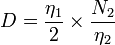
  • Difficulty :

D = { \eta_1 \over 2  } \times { N_2 \over \eta_2 }

  • Effort:

E =  D \times V

The big problem with this approach is that you can’t calculate the metrics until you have written the code. This is problematic at the quotation stage of a project.

Our approach is based more on heuristics (i.e. educated guessing). By completing the following quick questionnaire we can come up with a score out of 100 which approximates the complexity and hence development effort required. This is used as an input into calculating the number of hours required and ultimately the cost.

Reefwing Complexity Matrix

  1. How customised is the user interface? Score from 0 for using the provided UI elements to 20 for a totally customised UI. Most game apps score a 20 for this, as everything from the buttons to the navigation bars need to be customised to suit the game theme. Utility apps are more likely to get a low score.
  2. How complicated is the underlying data model? This could vary from 0 for no persistent data to 20 for server based data. Using SQL or Core Data (for iOS) would be somewhere in the middle.
  3. How complex is the app? This relates to the app objective and may influence the other considerations. For example, an app with low complexity may simply display data. The other extreme would be an app that performs route mapping or language recognition. This dimension is a measure of what you are trying to do, the previous question on the data model is an element of how you are solving the problem. A lot of games can be surprisingly complex, an example of this would be if you were trying to build a decent AI for a 3D environment. Complexity will also influence how much code you will need to write which in itself will make life more difficult (have a look at the Halstead equations above).
  4. Who, what or how does the app have to communicate? You would score a 0 for this if the app was stand alone. The score would rise with the scale and type of networking required. You would also take into account how the networking was performed (e.g. Bluetooth, Wi Fi, etc) and how robust it needed to be (redundancy?).
  5. Does the app require 3rd party libraries or API’s? This could be ad servers, geo location, language recognition, translation services or anything similar. Score 0 for none and increase the score based on the number of interfaces. We also vary the score based on the maturity of the API and the API provider.

Once you have calculated your complexity score by adding the results from the five questions above you will get a number out of 100. We segment our apps into the following categories:

  • > 80: Insane:: You probably need to double the price you first thought of. Complexity increases exponentially (not linearly) with added elements because they all interact with each other.
  • 60 – 80: Difficult:: In this range you would double check everything and ensure that you have a tight specification. This app will likely take you longer than you expect and throw up things that you don’t expect. Add an extra 25 – 50% contingency.
  • 40 – 60: Average:: Most apps will fall into this range, no extra contingency should be required as long as the specification is solid and you have wire frames.
  • 20 – 40: Easy:: Should be a walk in the park. A good place for beginner developers to start.
  • 0 – 10: Simple:: There can never be too many fart apps.

We haven’t seen any other attempts to model app complexity but we would love to hear about the practices or thoughts of other developers.

Filed Under: App Development, Title Post Tagged With: app, calculating, degree, development, difficulty, estimate, quote, quoting

May 7, 2014 by David Such Leave a Comment

Android Studio for App Development

Androidgears

At Google I/O 2013, Google launched a new Integrated Development Environment (IDE) based on IntelliJ IDEA, called Android Studio.

Android Studio provides integrated Android developer tools for development and debugging. On top of the capabilities you expect from IntelliJ, Android Studio offers:

  • Gradle-based build support.
  • Android-specific refactoring and quick fixes.
  • Lint tools to catch performance, usability, version compatibility and other problems.
  • ProGuard and app-signing capabilities.
  • Template-based wizards to create common Android designs and components.
  • A rich layout editor that allows you to drag-and-drop UI components, preview layouts on multiple screen configurations, and much more.
  • Built-in support for Google Cloud Platform, making it easy to integrate Google Cloud Messaging and App Engine as server-side components.

Android Studio includes a powerful code editor, which supports smart editing, advanced code refactoring, and deep static code analysis.

Smart editing includes inline resource lookups that make it easier to read your code. Code refactoring allows you to transform your code across the scope of the entire project.

Static code analysis helps you identify bugs quickly. On top of the hundreds of code inspections that IntelliJ IDEA provides, Google have added custom inspections. For example,  metadata to the Android APIs, that flag which methods can return null and which can’t, which constants are allowed for which methods, and so on. Android Studio uses that data to analyze your code and find potential errors.

Be aware that Android Studio is currently available as an early access preview. Several features are either incomplete or not yet implemented and you may encounter bugs. If you are not comfortable using an unfinished product, you may want to instead download (or continue to use) the ADT Bundle (Eclipse with the ADT Plugin).

Instructions for downloading the latest version of Android Studio are available here: http://developer.android.com/sdk/installing/studio.html. Versions are available for download on Windows, Mac OS X and Linux.

Filed Under: Android, App Development Tagged With: android, app, development

May 6, 2014 by David Such Leave a Comment

How much money will my app make?

For many people the whole point of writing applications is to see them published in the App store and available for download from iTunes. Before you quit your job and go out and buy matching Porsche 911’s you would be wise to get a few months of sales data under your belt. Like most endeavours, there is a bell curve of app sales. Everyone hears about Angry Birds developers making $70m, but there is a lot less media coverage at the other end of the bell curve.

In a recent survey of more than 1,500 developers in 83 countries, it was found that the average per-app revenue is roughly $1,200 to $3,900 depending on the platform. Additionally, the survey noted that an app has roughly a 35% chance of generating between $1 to $500. This obviously means that most developers cannot rely on app development as their main source of income. However, it does mean that if you put the effort in you can make enough to fund your development habit.

Our own experience is that you can never tell which Apps are going to be regular sellers (LifeGoals) and which will sink like a stone (LifeMovie). The Reefwing stable of Apps currently nets us around AUD$10k per annum, which is sufficient to purchase a MacBook Air, a new iPad, external development costs (Apple Developers Licence, App Sales Analytics, web-site and forum costs, etc.) plus a bit of change for the highly caffeinated beverages which programmers run on. Working mainly on on our contracted 3rd party apps we only work on these on the odd night and weekend so with more application we imagine the rewards would be better. The thing that we are no where near recovering is the time spent developing. The average App takes us about 3 months from start to finish and while the proceeds roll in for some years to come, it isn’t really passive income because sales quickly decline if you aren’t frequently updating your app.

However, lets face it – we would code if we didn’t get paid anything so anything we do get is a very pleasant upside. There is also something addictive about tracking the daily “sales” of you app (even if it is free).

The other thing that most developers don’t realise, is that the apps which are successful in the App store, have as much time and money spent on marketing their Apps as they do on developing them. There is the odd exception but these are an exception. Books have been written on this subject and we will provide our thoughts on the best approaches to marketing in another blog post.

Filed Under: App Development, Marketing Tagged With: app, development, marketing, profit, sales

May 1, 2014 by David Such Leave a Comment

Making Money From Apps

14 Ways to Monetize your App (courtesy of yourAppreport.com)

1. Paid Downloads aka Pay Per Download – Paid downloads work as users pay up-front to download your app once it’s available in one of the app markets. Paid download apps work well for apps in the gaming, entertainment, productivity, navigation and news categories. However, the more users pay up-front, the less tolerant they may be of advertising or in-app purchases. You might try considering to offer a free version plus a paid version of your mobile app with additional content that contains fewer or maybe even no advertisements.

2. In-App Advertising aka Mobile Ads – One of the most popular among mobile app developers. In-App Advertising works by allowing ads run on space sold within your app and revenue is based on number of user impressions and/or clicks. These really work well on the gaming, news, chat and entertainment category apps. However, the small drawback with in-app ads is that your app will have to bring back users regularly, and basically be designed for heavy use.

3. In-App Purchases or Subscriptions – In-App Purchases work by allowing users additional purchasing privileges, badges or subscriptions inside the app once they’ve downloaded it. These work pretty good for apps in the gaming, lifestyle and news categories. However, this type of app really requires a very loyal following of users that are willing to pay for virtual or ongoing benefits. You will need to regularly add fresh content as well.

4. Sponsorships – Sponsorships can work by individuals or businesses basically under-writing your app in exchange for recognition type benefits. An example of this would be maybe an ad or logo within your app. These work best for Local + Event focused apps and narrow focused audiences. The drawback here is that these are typically a one-shot source of revenue. They usually aren’t ongoing or scalable. However, it’s a pretty good way to get a first app off the ground.

5. Push Ads: Ads are displayed in the notification tray of an opted-in user’s device. CTR’s and conversion rates are sky high with this format, since there are no accidental clicks like with in-app ads. Advertisers pay on a CPC basis. Unlike traditional mobile ads, these ads are not placed inside apps. Each ad is also tagged with a permanent opt-out link, as well as the name of the app which delivered the ad. However, on iOS systems, you can get really crafty with Apple’s push notifications availability. (Be careful with that).

6. Icon Ads: Similar to the pre-installed apps which come with a new smartphone, Icon Ads are sponsored shortcuts (icons) placed on the home screen of an opted-in user’s device. Advertisers pay on a CPI basis for each icon installed on a device.

7. Dialog Ads: Ads are displayed as a dialog box inside an app, presenting the user with a 1 sentence call-to-action along with an OK and Cancel button. For example, the ad can ask the user “Check out a free new 3-d game” with an OK and Cancel button underneath. Advertisers pay on a CPC basis.

8. OfferWall Ads: Ads for individual promotional offers are placed in a single in-app interstitial and can be selected by a user for participation. Advertisers pay on a CPC or CPA basis.

9. Video Ads: High-quality Video Ads are shown in-app. Our proprietary ad server only displays Video Ads to users on a wi-fi or 4g connection, ensuring a positive viewing experience. Advertisers pay on a CPM basis.

10. Rich Media Ads: A full landing page is embedded inside an app, with a fixed close button at the top. Advertisers can build rich experiences which are directly embedded in another app.

12. Full-Page Banner Ads: Ad is displayed as an in-app interstitial to users, with a fixed close button at the top. Advertisers pay on a CPC basis.

13. AppWall Ads: AppWall a new interstitial mobile ad format that Advertisers can use to generate huge CTRs and higher engagement than virtually any other in-app ad type. Displayed within an app session, AppWall displays a variety of different offers and actively optimizes their placement in order to drive results that were never before possible in the mobile marketing space.

14. Affiliate Offers: A great way to monetize your app  is to leverage affiliate offers. There are 1000’s of affiliate offers available for almost any topic. When you hear “affiliate” you may be thinking someone has to pull out their credit card and purchase something from an online store and you will get a percentage… this is true, but there are also PPA affiliate offers (Pay Per Acquisition)- where you can get paid if one of your app users simply registers for a newsletter or website.  I have found these offers work great in apps.  Most people prefer to make affiliate purchases, with a credit card on their desktop computer, most people don’t want to pull our a credit card and type all those digits into their little smartphone screen. With PPC offers- you can show the user a relevant ad, the user can signup for a newsletter and you can get paid $1,2$ or more each time

Here are some affiliate sites to check out for PPA offers you could add to your app:

  • Peerfly
  • Escalate Network
  • MySavings
  • LinkShare
  • Panthera Network

Filed Under: Uncategorized Tagged With: app, marketing, monetize

April 30, 2014 by David Such Leave a Comment

Marketing your App

marketing

Building the greatest app in the world means very little if nobody can find it. Marketing considerations are a critical aspect of any app launch. This is true now more than ever, as the app store becomes more and more competitive.

Most developers have processes and checklists around app development prior to go live, like testing on multiple devices. What about a checklist for app marketing prior to go live? Below is an App Marketing & Go Live Checklist (courtesy of AppReporting.com) that we like to go through before we launch an app.

Marketing Checklist:

  • Include Social Media Integration Within the app. Allow users to share via Facebook, Twitter etc
  • Include Email Share features. Word of Mouth Marketing! Allow your users to email their friends about your app.
  • Include direct feedback option. Allow users to submit feedback and comments within the app. Getting negative reviews hurts! Reduce the odds of negative comments by allowing your users to provide feedback directly to you with your app.
  • Promote and entice ratings within your app. Ratings are a form of marketing for your app, a very important form. Getting positive ratings is critical. Ask user to rate and review your app, within your app. I posted about this here: How to Get More (& Positive) App Reviews and Ratings
  • Online Marketing- create a dedicated website for your app. These days hosting is inexpensive. With most major hosts you can do a one click install of WordPress and using a free (and responsive, so it plays well on mobile) theme you can be up and running in little time. A website is key because you can link your Press Releases back to your website and App Review Requests. Your website will earn links and eventually rank in Google and other search engines for search queries related to your app. This form of online marketing will help your app get more installs by driving search traffic from the search engines.
  • Social Media- create a Facebook page for your app. Create a Twitter account for your app. Publicize your social media accounts on your dedicated app website.
  • Optimize Your App Description. Using keyword research (Google Keyword Planner) create a strategy for your app. Ensure your app title, description and keywords are optimized for a strategic keyword. Once your app page is optimized focus attention to optimizing your dedicated app website.
  • Design an amazing app icon and screenshots. This is the most overlooked by app publishers. Your potential app users are very design focused… both app stores and centered mainly on app icon images. Remember someone looking for your app is really looking at your app icon first, along side dozens of your competitors icons. If your icon doesn’t stand out, they will simply click on your competitors icon. I have seen so many truly great apps that fail because the icon is poorly designed. Look at your app icon next to your competitors icon before you launch your app and see if it stands out well, ask yourself “would I click on my icon or one of the others?”
  • Create a Press Release for your app. Post it on your dedicated app website.. and post it to press release sites.
  • Create a short video demo of your app. Post it to YouTube. Share it in your Press Release.. share it when you request app reviews.
  • Prepare for app review requests. There are hundreds of websites that review apps.. many for free. Once your app is live- submit it to these sites to get reviews and links to your app. Include your press release and video url with your request. Our team can do this work for you and submit your app to over 155 iPhone app Review Sites or over 115 Android App Review Sites.
  • Research related blogs to your app. Every App has an audience and for every audience there are blogs. Research blogs that are on the same topic of your app. Find the related site, contact details, Facebook profiles. When your app is ready you can reach out and network with these sites to help market and promote your app. You can share your Press Release and YouTube Video and you can kindly request a review of your app. You can also offer to guest post on their blog in return for a link back. You can do this work yourself, or have our team assist by researching 100 related blogs to your app.

Filed Under: App Development, Title Post Tagged With: app, marketing

April 28, 2014 by David Such Leave a Comment

The Care & Feeding of Your Developer

PastedGraphic-1

You have decided that your business needs an app, so what is the best way to ensure that you get what you want?

Well you could follow the App Happening four step framework:

  • Concept, Marketing & Viability
  • Design & Specs
  • Build & Approve
  • Launch & Support

This is a best in class solution for getting the app you want, at the lowest cost, in the shortest possible time. App Happening provides free marketing tips, app concept templates, strategy guides, development timelines and even an eBook on creating a successful app (http://www.apphappening.com/ah/appbuildingguides). So why does (almost) nobody use these? I suspect the reason is a combination of, “too hard”, “why bother” and “I just want to get started”!

As a Developer, I’m not too worried about whether your app is going to sell well or deliver on your business case. My job is to deliver the app you specified at the cost I bid and within the agreed time frame. If you have reached the stage of hiring a Developer, I assume that you have already worked out that the cost and effort is worthwhile. If not, then I suggest that you go and have a look at the Concept, Marketing & Viability section (http://www.apphappening.com/ah/conceptmarketingviability) of the web site.

I’m also assuming that you have a clear idea of what your app will do, because if you don’t, explaining the concept to me will be difficult. I don’t need a complete Functional Description and fully laid out screen shots initially but I need enough to be able to provide you a price and how long the development process will take. Before going into the bare minimum specification requirements, I would like to discuss why the specification step is important.

How to spend a lot of Money and NOT get what you want!

PastedGraphic-2

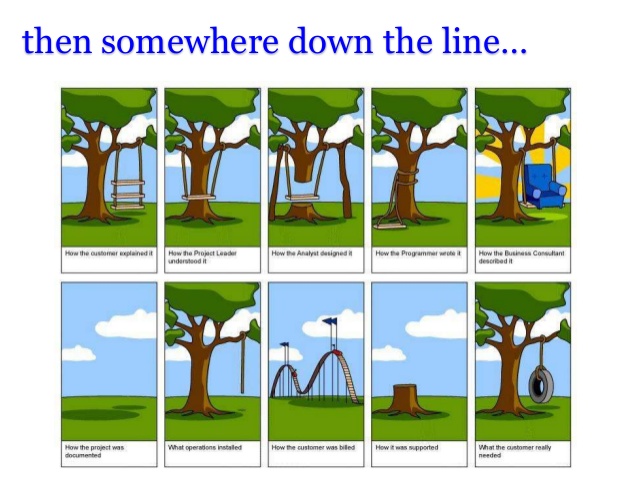
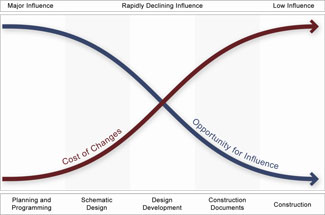
If you have ever renovated a house you will know that the cheapest time to modify the design is before construction start. It is exactly the same for app development. You want to have a very good idea of the outcome before you start. Sooner or later you will need to make decisions about what the app will do and what it will look like. Given this fact, doesn’t it make sense to do it at the beginning? I guarantee that if you do, it will save you money and reduce frustration.

There are generally two ways that you can engage a Developer:

1. Fixed price; or
2. Hourly rate.

If you choose to go the hourly rate route then you could just make it up as you go along (some people call this AGILE development) but it can become expensive. If you select the fixed price approach, it is much more important that you get the definition phase correct. Do not assume that a feature that you want is included in the design, if it hasn’t been explicitly specified then your developer hasn’t costed it and it is unlikely to end up in the final product. Assumptions in the design phase of fixed price contracts lead to disputes, which waste everyones time and energy.

design

I have enough stress in my life…

If the specification of your app consists of something like “i need a game built in 1 week for a fixed price of $100”, don’t be surprised if no developers bid on it (what game? what platform? what device? what???). The level of design specification required depends on where you are in the development cycle. If you just want indicative pricing to plug into your business model then simple dot points which describe the objective, functionality and target platform (e.g. iOS or Android) are probably sufficient – just be up front with the Developer.

If you are committed to building an app then I’m afraid that I’m going to direct you back to the App Happening website page (http://www.apphappening.com/ah/designspec) on Design and Specification. It is in your interests to specify the app as fully as possible. You should include the Developer in this process if possible. Start with your simple dot point functional specification. Your Developer can tell you what is technically possible on a particular platform and what is possible but difficult (i.e. expensive). Once you have a good idea of app functionality, sketch up some indicative screen shots (wire frames), pen and paper is fine. Alternately get the Developer to suggest something. You want these wire frames to be low fidelity so that people are comfortable playing around with the design and changing them. The combination of the Functional Spec and the Wireframes will give you a flow diagram or flow map which describes how users will move around your app. Make sure that key functional screens are at the top of your navigation stack.

If your Functional Spec is detailed enough, the data base design (if required) will fall out of this. For a people based app, you may want to save information like name, address, phone, favourite colour, etc. Consider whether you think the data model will change in the future, if the ability to update and migrate data models isn’t built into the original design it can be expensive to retrofit it.

If you follow the above suggestions, your Developer will be in the best possible position to assure you get what you want, when you want it.

Filed Under: App Development, Title Post Tagged With: app, development

April 28, 2014 by David Such 3 Comments

Why Your Business Needs An App

innovation

What are five ways that you can harness the power of mobile apps?

If you decide to have an app built for your business, it’s important to be clear about your objectives from the start and strategise around them:

1. To disrupt a market (or prevent you from being disrupted).

According to Wikipedia (http://en.wikipedia.org/wiki/Disruptive_innovation), disruptive innovations are those that “improve a product or service in ways that the market does not expect, typically first by designing for a different set of consumers in the new market and later by lowering prices in the existing market.” Experience has shown that you want to be the one doing the disrupting (just ask Kodak or Encyclopaedia Britannica). The Economist (http://www.economist.com/node/21530920) estimates that there will be 20 billion mobile connected devices by 2020, this provides app developers with direct access to most of your customers. You could consider mobile devices as viruses infecting your customers and apps are the payload. Uber (https://www.uber.com/) is an example of an app which is disrupting the limousine/taxi business. It provides a better service (the app knows where you are and you can see where your vehicle is in real time) and creates customer stickiness. Uber knows who the customers are and manages payment (taking their percentage off the top), the Limousine Companies no longer own the relationship which is the beginning of the end. Could someone do this to your business?

2. Apps provide another channel into your business. 

Mobile is quickly becoming the preferred e-commerce channel. 7 out of 10 online consumers access multi-channel retailers through one or more digital channels. In addition, there is a growing trend towards self service. Most call centres are experiencing year on year 20-30% decreases in phone calls, as customers move their enquiries to other channels (e.g. web and mobile). People expect to be able to change their preferences or order a goods or service no matter where they are or what time it is. If you don’t provide this capability, your competitors will.

3. An app can help build brand strength. 

Intuit have built an app called Mint (https://www.mint.com/what-is-mint/) that aggregates your financial life in one place. The Banks need to be careful that they don’t become a commodity. Any time someone gets between you and your customer, you have lost control of the relationship and of the customer experience. This makes it very easy for you to be replaced by someone else. Conversely, Domino’s have built an app which gives you a pizza store in your pocket. It allows you to browse through all the products on their menu, customise your own pizza (1.8 billion pizza combinations!), design your order, choose pick up or delivery and best of all track exactly when your order is ready in store or when it’s going to arrive at your front door. This app creates customer loyalty.

4. To deliver additional revenue.

If the preceding reasons haven’t convinced you then perhaps a business case will. How can a business be confident that the financial return justifies the initial investment and ongoing expenses? I’m afraid that only you can put together that business case but the 900,000 apps on iTunes and a similar number on Google Play suggest there is something there. Some factors to consider, when building your business case:
Increased sales by having a one to one relationship with customers;
Elimination of inbound calls through customer self service;
Reduced handling time and mistakes through automated process; and
Increased revenue through advertising5. It allows you to compete with anyone anywhere.

The last reason for you to build an app is that it provides you with a force multiplier. This is a concern for large established business and an opportunity for new start ups. In the new digital world, you don’t need expensive property in the main street of town to be successful. Anyone can develop a professional app which is a window to your services. Apps (and web sites) are the great equalisers. More and more goods and services are being procured and fulfilled electronically. Your business needs to embrace this trend.
This blog was first posted on the App Happening web site (http://blog.apphappening.com/5-reasons-business-needs-app/)

Filed Under: App Development, Title Post

  • Page 1
  • Page 2
  • Go to Next Page »

Primary Sidebar

Email Newsletter

Sign up to the Reefwing Software mailing list to hear about new app releases and other company updates. We won't share your details with others.

Recent Posts

  • Creating Minesweeper using BeeWare, Python, and Pygame April 9, 2024
  • Adding a User Interface to ChatGPT with BeeWare — Part 4 April 7, 2024
  • Version 0.0.2 of Copy Editor Released March 30, 2024
  • New FREE Copy Editor App for macOS March 16, 2024
  • The “Hard Problem” of Consciousness February 1, 2024

Featured Posts

Creating Minesweeper using BeeWare, Python, and Pygame

April 9, 2024 By David Such Leave a Comment

How to create a cross-platform clone of the 90’s classic game Minesweeper, using the briefcase/pygame/python tech stack. #beeware #pygame #python #minesweeper https://reefwing.medium.com/creating-minesweeper-using-beeware-python-and-pygame-e8dae29cf02d

Archives

  • April 2024
  • March 2024
  • February 2024
  • January 2024
  • November 2023
  • October 2023
  • July 2023
  • June 2023
  • May 2023
  • April 2023
  • March 2023
  • November 2022
  • September 2022
  • August 2022
  • July 2022
  • April 2022
  • March 2022
  • February 2022
  • January 2022
  • October 2021
  • August 2021
  • July 2021
  • June 2021
  • February 2021
  • November 2020
  • October 2020
  • May 2020
  • April 2020
  • January 2020
  • November 2019
  • October 2019
  • September 2019
  • July 2019
  • June 2019
  • May 2019
  • March 2019
  • January 2019
  • December 2018
  • October 2018
  • September 2018
  • August 2018
  • July 2018
  • June 2018
  • May 2018
  • March 2018
  • January 2018
  • December 2017
  • November 2017
  • October 2017
  • September 2017
  • August 2017
  • July 2017
  • June 2017
  • April 2017
  • February 2017
  • January 2017
  • December 2016
  • November 2016
  • October 2016
  • September 2016
  • July 2016
  • May 2014
  • April 2014

Search

Copyright © 2025 · Executive Pro on Genesis Framework · WordPress · Log in